All News

"A graphic announcing 'October is Cyber Security Awareness Month,' with text explaining the importance of creating a cyber emergency contact list in preparation for a cyber attack. It also includes a 'Cyber tip' to assess passwords, turn on MFA, and review critical accounts, especially email. A shield icon with a checkmark and a lightbulb icon are visible."

In cybersecurity, filtering and monitoring are proactive measures that act as your digital watchdogs, guarding against threats by controlling what comes in and out of your networks and systems, and by continuously observing activity for suspicious signs. These practices are essential for early threat detection and prevention.

"A graphic announcing 'October is Cyber Security Awareness Month,' with text explaining the importance of creating a cyber emergency contact list in preparation for a cyber attack. It also includes a 'Cyber tip' to assess passwords, turn on MFA, and review critical accounts, especially email. A shield icon with a checkmark and a lightbulb icon are visible."

Printers are often overlooked, however, they can represent significant security vulnerabilities if not properly secured.  Modern printers are essentially specialised computers with network connections, storage capabilities, and their own operating systems, making them potential targets for cybercriminals.

"A graphic announcing 'October is Cyber Security Awareness Month,' with text explaining the importance of creating a cyber emergency contact list in preparation for a cyber attack. It also includes a 'Cyber tip' to assess passwords, turn on MFA, and review critical accounts, especially email. A shield icon with a checkmark and a lightbulb icon are visible."

In any organisation, and even for individuals with multiple devices, simply knowing what hardware and software you own is the foundational step for effective cybersecurity. This practice is known as asset management, and it's far more than just an inventory list; it's a critical component of risk management and security posture. You cannot protect what you do not know you have, or what state it's in.

"A graphic announcing 'October is Cyber Security Awareness Month,' with text explaining the importance of creating a cyber emergency contact list in preparation for a cyber attack. It also includes a 'Cyber tip' to assess passwords, turn on MFA, and review critical accounts, especially email. A shield icon with a checkmark and a lightbulb icon are visible."

When upgrading your tech or getting rid of old devices, simply deleting files or formatting a hard drive is often not enough to truly erase your data. Safe disposal of hardware is a critical, yet frequently overlooked, aspect of cybersecurity. If sensitive personal or organisational information remains recoverable on old devices, it can easily fall into the wrong hands, leading to identity theft, financial fraud, or severe data breaches.

"A graphic announcing 'October is Cyber Security Awareness Month,' with text explaining the importance of creating a cyber emergency contact list in preparation for a cyber attack. It also includes a 'Cyber tip' to assess passwords, turn on MFA, and review critical accounts, especially email. A shield icon with a checkmark and a lightbulb icon are visible."

Anti-virus and anti-malware are essential tools that are designed to detect, prevent, and remove malicious software – collectively known as malware – that can infect your devices, compromise your data, and disrupt your operations. Just like your body needs an immune system to fight off infections, your digital devices need protection against cyber threats.

"A graphic announcing 'October is Cyber Security Awareness Month,' with text explaining the importance of creating a cyber emergency contact list in preparation for a cyber attack. It also includes a 'Cyber tip' to assess passwords, turn on MFA, and review critical accounts, especially email. A shield icon with a checkmark and a lightbulb icon are visible."

In the fast-evolving world of cybersecurity, software, operating systems, and applications are constantly being refined, improved, and, crucially, secured. Regular updates, also known as patching, are not merely about gaining new features or improving performance; they are an absolutely critical cybersecurity practice. Neglecting updates is like leaving your digital doors wide open after a burglar has already identified the weak spots.

"A graphic announcing 'October is Cyber Security Awareness Month,' with text explaining the importance of creating a cyber emergency contact list in preparation for a cyber attack. It also includes a 'Cyber tip' to assess passwords, turn on MFA, and review critical accounts, especially email. A shield icon with a checkmark and a lightbulb icon are visible."

In cybersecurity, access control for users is about ensuring that only authorised individuals can access specific systems, applications, and data, and only to the extent necessary for their role. This principle is often referred to as the "principle of least privilege"  – granting users the bare minimum permissions required to perform their job functions, and nothing more.

"A graphic announcing 'October is Cyber Security Awareness Month,' with text explaining the importance of creating a cyber emergency contact list in preparation for a cyber attack. It also includes a 'Cyber tip' to assess passwords, turn on MFA, and review critical accounts, especially email. A shield icon with a checkmark and a lightbulb icon are visible."

Your Wi-Fi network and broader internal networks are the digital gateways to all your connected devices, resources and data. Just as a physical building needs secure entrances, your networks require robust access controls to prevent unauthorised entry and protect everything within. Ignoring network security is like leaving your front door wide open.

"A graphic announcing 'October is Cyber Security Awareness Month,' with text explaining the importance of creating a cyber emergency contact list in preparation for a cyber attack. It also includes a 'Cyber tip' to assess passwords, turn on MFA, and review critical accounts, especially email. A shield icon with a checkmark and a lightbulb icon are visible."

The shift to remote work has transformed how we work, but also introduces new cyber security challenges, particarly around access control in a less structured environment, like a home office.  When working off site,  your personal network and devices become potential entry points into your organisation's systems, making robust access control crucial.

"A graphic announcing 'October is Cyber Security Awareness Month,' with text explaining the importance of creating a cyber emergency contact list in preparation for a cyber attack. It also includes a 'Cyber tip' to assess passwords, turn on MFA, and review critical accounts, especially email. A shield icon with a checkmark and a lightbulb icon are visible."

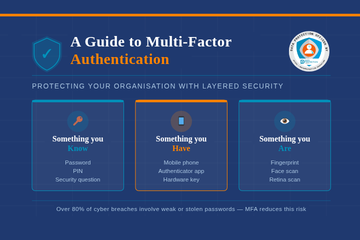
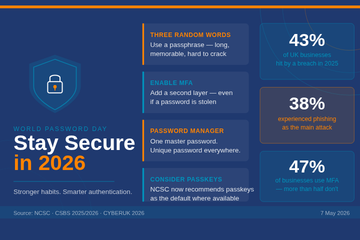
Multi factor authentication is considered the most impactful single step you can take to strengthen your access control to digital accounts, systems and data. While a strong password is your first line of defence, MFA adds a critical second (or more) layer of verification, making it much harder for cyber criminals to gain unauthorised entry, even if they've stolen your password.

  1. October 12. Training: Empowering your human firewall
  2. October 11. Policies and Procedures: Cyber Blueprint
  3. October 10. Understanding Your Cyber Posture
  4. Time's Ticking: Windows 10 support ends in October 2025!
  5. October 9. A Guide for Education Providers
  6. October 8. How Can Your Organisation Prevent Ransomware Attacks?
  7. October 7: Under Attack: The Reality of Ransomware
  8. October 6: Cyber Action Plan and A Roadmap to Resilience
  9. October 5: Cyber Responsibilities - We're All in This Together
  10. October 4: When a Cyber Attack Hits
  11. October 3: Data Security, the Core of Protection
  12. October 2: Privacy Protection & Safeguarding Personal Data
  13. October 1: Welcome to Cyber Security Awareness Month!
  14. Nursery Cyber attack
  15. The NCSC Cyber Assessment Framework
  16. Fraud awareness from the DfE
  17. The Classroom's Dark Side: Cyber crime from the Classroom
  18. KCSIE 2025: Data Protection, AI, and Cyber Security
  19. New e-learning for 2025
  20. The Latest Cyber Threat: The "Murky Panda"
  21. Building a Secure School: Using the ICO Accountability Framework to Meet DfE Digital Standards
  22. Digital Safeguarding: DfE announces statutory DfE Digital Standards
  23. Compliance Reporting from the Knowledge Bank
  24. Social engineering + impersonation = Fraud ≡ cyber deception
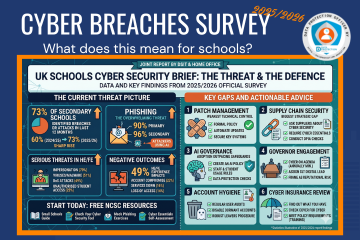
  25. Data Breaches 2025 Report Highlights
  26. School cyber attack: Framlingham College, Suffolk
  27. Getting caught in the Scattered Spider web
  28. A Wake-Up Call for Cyber Vigilance - Danger in the Threat Landscape for Everyone
  29. Social Media and Marketing Guidelines and Training
  30. New Governor Resources
  31. Apple removes its highest level data security tool from UK customers
  32. Safer Internet Day, Cyber Security & Data Protection
  33. The Cyber Resilience Championship
  34. The Multiple Dimensions of Supplier Due Diligence
  35. Blacon High School Cyber Attack
  36. The role of Passkeys in Cyber Resilience and Cyber Security
  37. What the proposed Government legislative proposal around cyber crime means
  38. Effectively communicating during a cyber incident
  39. Safeguarding Identity in Microsoft 365: Protecting the UK Education Sector Against Cyber Threats
  40. Cyber Security Best Practice Area
  41. DfE Digital Standards for Schools and Colleges Tracker
  42. New Policies, Documents, Letters and Posters page
  43. Schools and Trusts Best Practice Area
  44. The DPE Retention Schedule
  45. Making the Rounds Update (now includes reporting)
  46. How does the recent global IT outage affect me?
  47. King's speech introduces new bills in relation to cyber security, smart data and digital information
  48. Out of date technology
  49. What's a Cyber Incident and what should we do?
  50. Cyber attack on a school during half term
  51. Free short cyber training for staff
  52. The rise of cyber attacks in schools are causing pupils to miss classes
  53. ICO: Learning from the mistakes of others report
  54. Children's mental health data leaked after a cyber attack
  55. Cyber attack on a Trust; the aftermath
  56. Social Media Best Practice Area
  57. Lettings Best Practice Area
  58. MFA Bombing - What is it?
  59. Product Focus on Checklists : Initial Trust Plan
  60. Product Focus on Checklists : Information and Cyber Security
  61. Product Focus on Checklists : End of Term Checklist
  62. Product Focus on Checklists : Social Media
  63. Cyber Incident Review: The Benefits
  64. Product Focus on Checklists : Lettings
  65. Product Focus on Checklists : Record of Processing
  66. Why Data Should Stay Put: Benefits of Keeping Data in Its Original System
  67. Product Focus on Checklists : Data Retention and Destruction
  68. Product Focus on Checklists : Data Migration
  69. Product Focus on Checklists : Biometrics
  70. Product Focus on Checklists : Supplier Due Diligence
  71. Free Cyber help, advice and training with the Cyber Resilience Centres
  72. The Perils of Paper: The Printing Vulnerability
  73. Product Focus on Checklists : FOI
  74. Product Focus on Checklists : Governors and Data
  75. Product Focus on Checklists : DPIA
  76. Product Focus on Checklists : Site Moves
  77. Product Focus on Checklists : Data Breaches
  78. Product Focus on Checklists : Subject Access Requests
  79. Cyber attack on a University
  80. Product Focus on Checklists : Bring your own device
  81. Product Focus on Checklists : Working out of school/offsite
  82. Cyber Attack on a School
  83. Product Focus on Checklists : Redaction
  84. Product Focus on Checklists : CCTV
  85. Product Focus on Checklists : Clear desk
  86. Product Focus on Checklists : Commitment to compliance
  87. Product Focus on Checklists : Photos and video
  88. Product Focus on Checklists : Passwords
  89. Product Focus on Checklists : Information Classification
  90. Kent Councils Data Breach
  91. Free cyber training for staff
  92. DfE Digital Standards Update
  93. Where is your data stored?
  94. Phishing attacks targeting schools - alert from City of London Police
  95. The ICO reprimands a Multi Academy Trust
  96. CISA and UK NCSC Announce Joint Guidelines for Secure AI System Development
  97. Trust Initial Plan Checklist Update
  98. Update on Advisory for Rhysida Ransomware
  99. Records Management Best Practice Update
  100. The Crime in a Cyber Attack and a Data Breach
  101. NCSC Annual Review is published for 2023
  102. Learning from Data Breaches
  103. Windows 11 security ineffective against attacks on old devices
  104. Trust Initial Plan for Data Protection Compliance (for Multi Academy Trusts)
  105. International Counter Ransomware Initiative 2023 Joint Statement
  106. Google for Education Resources: Helping IT Admins meet DfE digital and technology standards
  107. Top Ten Cyber Security Misconfigurations
  108. ICO Reprimand: company suffered a ransomware attack
  109. The UK Online Safety Bill becomes an Act (Law)
  110. The importance of software updates (PaperCut vulnerability and Rhysida ransomware)
  111. Ransomware, extortion and the cyber crime ecosystem
  112. Cyber Resource: The Cyber Resilience Centre Group
  113. Email and Security: ICO recent guidance
  114. Help after a Cyber Attack/Incident
  115. What to do in the event of a Cyber Attack
  116. How KCSIE is linked to Cyber Strategy
  117. Cyber Crime: AI Generated Phishing Attacks
  118. Cyber Attack: Exam Boards
  119. VICE SOCIETY - Ransomware attacks on schools
  120. Using Tags if you are a group of organisations in the DPE Knowledge Bank
  121. Where's Harry the Hacker?
  122. Be Cyber Aware: USB Sticks
  123. Cyber Insurance in the Public Sector
  124. Types of Cyber Attacks: DDos Attack (Microsoft DDoS Attack in June)
  125. Cyber Attack: Leytonstone School
  126. Be Cyber Aware: Firewalls
  127. Be Cyber Aware: Cyber attacks and transparency. A no blame culture
  128. Cyber Attack: Dorchester School
  129. Knowledge Bank Role Types: Admin, Staff and Trustee
  130. Types of Cyber Attacks: Password Attacks
  131. Be Cyber Aware: Why regular software updates are important
  132. Cyber Attack: Wiltshire School
  133. Keeping your IT systems safe and secure
  134. Why we recommend using PIN codes on printers
  135. Types of Cyber Attacks: DDoS Attacks
  136. Types of Cyber Attacks: Phishing
  137. Redaction Guidelines Updated
  138. Types of Cyber Attacks: The Insider Threat
  139. Why your data is profitable to cyber criminals
  140. Using WhatsApp in Schools
  141. Knowledge Bank Updates
  142. Types of malware and how they are linked to data protection
  143. Windows Server 2012 & 2012 R2 Retirement
  144. How to contact us for support, subject access requests, data breaches and FOI's
  145. How a school fought back after a cyberattack
  146. Types of Cyber Attacks - Credential Stuffing
  147. January Cyber update - How Can Schools Help Prevent Cyber Attacks?
  148. Assigning courses to staff using to-dos
  149. The Education sector now at highest risk of cyber attacks
  150. Cyber Attacks
  151. Best Practice for Managing Photos and Video
  152. Compliance Manager released
  153. Emails – good practice and minimising the risk of a data breach

Search