- Tammy Buchanan
- Best Practice Updates
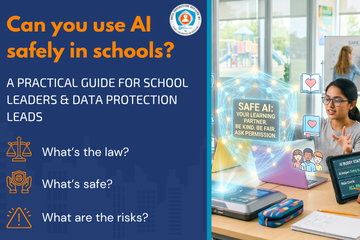
Can you use AI safely in schools?
ChatGPT, Gemini, Copilot and Data Protection
A Practical Guide for School Leaders and Data Protection Officers
ChatGPT, Gemini, Copilot and Data Protection
A Practical Guide for School Leaders and Data Protection Officers
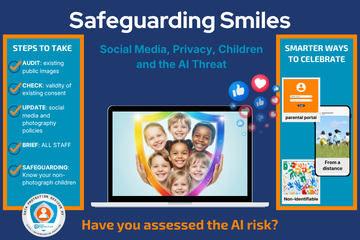
This article combines guidance from the Guardians of Privacy series, produced by Data Protection Education in collaboration with Litus Digital, with urgent new advice issued in May 2026 following confirmed blackmail attempts against UK schools using AI-manipulated images of children. Key sources include the UK Safer Internet Centre (8 May 2026) and the Internet Watch Foundation.
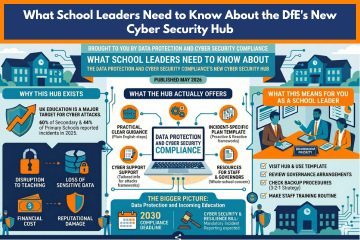
Cyber attacks on schools are no longer a distant threat. The Department for Education (DfE) has just launched a dedicated Cyber Security Hub to help schools navigate this growing danger, and as a school leader, it's worth understanding exactly what it offers and why it matters. If you were at our conference in February you were lucky enough to see a preview of the tool!
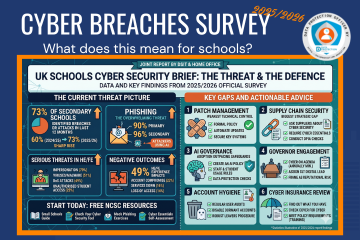
The Cyber Security Breaches Survey 2025/2026 was published on 30t April 2026 by DSIT and the Home Office. We outline the current threat picture for schools.
What is this? A new law that came into force on 29 April 2026. It changes how schools, councils, health services and police work together to keep children safe. Several parts of it directly affect how schools handle children's information. Data Protection is now embedded within Safeguarding practice.

Navigating the entry requirements for educational settings can sometimes be confusing for both the school and the visitor. To ensure a smooth, secure, and legally compliant process, it is essential to balance safeguarding requirements with data protection principles and DfE guidance.
The DfE has announced a new update to the DfE Digital Cyber Security Standards for Schools and Colleges.
The DfE Wireless Networks is part of the DfE Digital Standards guidance and has recently been updated to include references to Wi-Fi7. You must check with this standard before you plan any Wi-Fi upgrades!
There is a now clear guidance that specifies that any new wireless solution or upgrade must, at a minimum, meet the Wi-Fi 8 standard.
Wi-Fi 7 provides significantly higher throughput and lower latency. In a classroom where 30 students might simultaneously stream high-definition educational videos or engage in augmented reality (AR) lessons, Wi-Fi 7 ensures the connection remains stable and fast.
 |
The Wireless Network Standard is part of the set of DfE Digital Standards and one of the main core six which the DfE require schools to be meeting by 2030. |
The core sections are:
| Feature | Standard Requirement |
| Minimum Standard | Wi-Fi 7 (802.11be) |
| Authentication | WPA3 / Certificate-based / MFA for admins |
| Coverage | 100% of learning and admin areas (verified by heat maps) |
| Management | Centralized, manufacturer-approved management tool |
| Resilience | Manufacturer warranty and 24/7 support arrangements |
Whenever you upgrade or change your current Wireless Network, review the latest guidance in the DfE Wireless Network Standards to ensure you are meeting the standard.
You should upgrade or change your network if it is no longer meeting your device requirements.
If you're unclear about where to start with this, we would advise initially assigning an SLT digital lead in your organisation and work from there. The responsibility of meeting the standard lies with the school, it is up to you to ask your IT provider if you are meeting the standard and how to meet the standard. The DfE Digital Standards are a series of standards in document form that help you work towards being cyber resilient in all aspects of the organisation.
Making the Rounds: we will ask some of these questions when we come and visit your school or trust as part of our Making the Rounds or data walk. We will then provide feedback via a report.
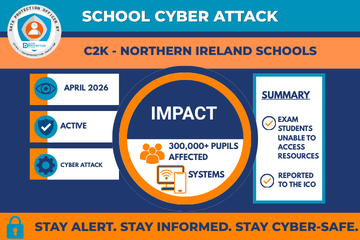
Just at the start of the Easter holidays, an IT system called C2K was the target of a cyber attack. The attack disrupted access to digital tools used by schools across Northern Ireland at a critical point ahead of the exam season.
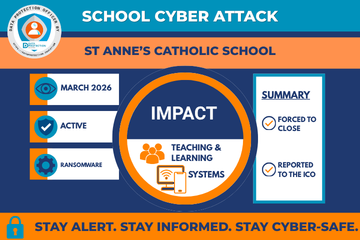
St Anne's Catholic School in Southampton has been forced to close four days after a cyber attack.
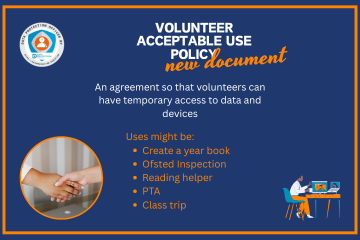
We're pleased to share our Acceptable Use Policy & Agreement for volunteers in response to our customer's requests.
This policy ensures the volunteers in your organisation use school technology responsibly and protect the personal data of pupils and staff.
We typically see a spike in Subject Access Requests (SARs) at the end of term. Understanding how to recognise and response to these requests is vital for staying compliant with Data Protection Law.
©2026 Data Protection Education Ltd.