"A graphic announcing 'October is Cyber Security Awareness Month,' with text explaining the importance of creating a cyber emergency contact list in preparation for a cyber attack. It also includes a 'Cyber tip' to assess passwords, turn on MFA, and review critical accounts, especially email. A shield icon with a checkmark and a lightbulb icon are visible."

October 28. Phishing: Don't Take the Bait!

Phishing remains one of the most prevalent and effective cyberattack methods, tricking millions into compromising their data every year. These deceptive messages, often arriving via email, text message (smishing), or phone call (vishing), are designed to look legitimate. They aim to trick you into revealing sensitive information like login credentials, credit card numbers, or personal data, or to click on malicious links that install malware.  They may also be the start of a more complex

Read more …

"A graphic announcing 'October is Cyber Security Awareness Month,' with text explaining the importance of creating a cyber emergency contact list in preparation for a cyber attack. It also includes a 'Cyber tip' to assess passwords, turn on MFA, and review critical accounts, especially email. A shield icon with a checkmark and a lightbulb icon are visible."

October 27. Passwords

Your password is your first, and often most critical, line of defence. Yet, far too many people still rely on easily guessable combinations like "123456" or "password," leaving their digital lives wide open to attack. Cybercriminals use sophisticated tools to crack weak passwords in seconds, and is one of the easiest forms of attack - low risk.

Read more …

"A graphic announcing 'October is Cyber Security Awareness Month,' with text explaining the importance of creating a cyber emergency contact list in preparation for a cyber attack. It also includes a 'Cyber tip' to assess passwords, turn on MFA, and review critical accounts, especially email. A shield icon with a checkmark and a lightbulb icon are visible."

October 26. Physical Security of Digital Assets

It's easy to overlook the importance of physical security when we rely so heavily on digital systems, but it's a critical component of overall cyber security. This means protecting your devices and data from unauthorised physical access. For individuals, it's locking your laptop when you step away, securing your home network equipment, and shredding sensitive documents. For organisations, it includes controlled access to offices and server rooms, securing hardware (laptops, USB drives), and m

Read more …

"A graphic announcing 'October is Cyber Security Awareness Month,' with text explaining the importance of creating a cyber emergency contact list in preparation for a cyber attack. It also includes a 'Cyber tip' to assess passwords, turn on MFA, and review critical accounts, especially email. A shield icon with a checkmark and a lightbulb icon are visible."

October 25. Server Security: Protecting Your Digital Core

For most organisations, servers are the undisputed backbone of their IT infrastructure. They house critical applications, store vast amounts of sensitive data (customer information, intellectual property, financial records), and power essential services. Consequently, servers are prime targets for cyber attackers, making robust server security an absolute necessity, not an option. A compromise of even one critical server can bring an entire operation to its knees.

Read more …

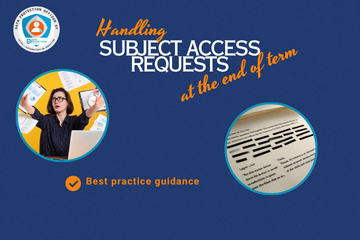
The Half Term SAR Surge Survival Guide" title image with a ghostly figure holding a black cat, and a partially redacted document in the foreground.

Subject Access Requests (SARs) - Half term

We often see a rise in the number of Subject Access Requests received by schools at the end of term or at the end of the academic year.  This article, therefore, covers guidance and support around subject access requests, how to recognise them and how to respond.

Read more …

"A graphic announcing 'October is Cyber Security Awareness Month,' with text explaining the importance of creating a cyber emergency contact list in preparation for a cyber attack. It also includes a 'Cyber tip' to assess passwords, turn on MFA, and review critical accounts, especially email. A shield icon with a checkmark and a lightbulb icon are visible."

October 23. Filtering and Monitoring

In cybersecurity, filtering and monitoring are proactive measures that act as your digital watchdogs, guarding against threats by controlling what comes in and out of your networks and systems, and by continuously observing activity for suspicious signs. These practices are essential for early threat detection and prevention.

Read more …

"A graphic announcing 'October is Cyber Security Awareness Month,' with text explaining the importance of creating a cyber emergency contact list in preparation for a cyber attack. It also includes a 'Cyber tip' to assess passwords, turn on MFA, and review critical accounts, especially email. A shield icon with a checkmark and a lightbulb icon are visible."

October 22. Hardware: Printers

Printers are often overlooked, however, they can represent significant security vulnerabilities if not properly secured.  Modern printers are essentially specialised computers with network connections, storage capabilities, and their own operating systems, making them potential targets for cybercriminals.

Read more …

"A graphic announcing 'October is Cyber Security Awareness Month,' with text explaining the importance of creating a cyber emergency contact list in preparation for a cyber attack. It also includes a 'Cyber tip' to assess passwords, turn on MFA, and review critical accounts, especially email. A shield icon with a checkmark and a lightbulb icon are visible."

October 21. Hardware: Asset Management

In any organisation, and even for individuals with multiple devices, simply knowing what hardware and software you own is the foundational step for effective cybersecurity. This practice is known as asset management, and it's far more than just an inventory list; it's a critical component of risk management and security posture. You cannot protect what you do not know you have, or what state it's in.

Read more …

"A graphic announcing 'October is Cyber Security Awareness Month,' with text explaining the importance of creating a cyber emergency contact list in preparation for a cyber attack. It also includes a 'Cyber tip' to assess passwords, turn on MFA, and review critical accounts, especially email. A shield icon with a checkmark and a lightbulb icon are visible."

October 20. Hardware: Safe disposal

When upgrading your tech or getting rid of old devices, simply deleting files or formatting a hard drive is often not enough to truly erase your data. Safe disposal of hardware is a critical, yet frequently overlooked, aspect of cybersecurity. If sensitive personal or organisational information remains recoverable on old devices, it can easily fall into the wrong hands, leading to identity theft, financial fraud, or severe data breaches.

Read more …

"A graphic announcing 'October is Cyber Security Awareness Month,' with text explaining the importance of creating a cyber emergency contact list in preparation for a cyber attack. It also includes a 'Cyber tip' to assess passwords, turn on MFA, and review critical accounts, especially email. A shield icon with a checkmark and a lightbulb icon are visible."

October 19. Anti-virus/anti-malware

Anti-virus and anti-malware are essential tools that are designed to detect, prevent, and remove malicious software – collectively known as malware – that can infect your devices, compromise your data, and disrupt your operations. Just like your body needs an immune system to fight off infections, your digital devices need protection against cyber threats.

Read more …

"A graphic announcing 'October is Cyber Security Awareness Month,' with text explaining the importance of creating a cyber emergency contact list in preparation for a cyber attack. It also includes a 'Cyber tip' to assess passwords, turn on MFA, and review critical accounts, especially email. A shield icon with a checkmark and a lightbulb icon are visible."

October 18. Regular Updates: Patching Against Threats

In the fast-evolving world of cybersecurity, software, operating systems, and applications are constantly being refined, improved, and, crucially, secured. Regular updates, also known as patching, are not merely about gaining new features or improving performance; they are an absolutely critical cybersecurity practice. Neglecting updates is like leaving your digital doors wide open after a burglar has already identified the weak spots.

Read more …

"A graphic announcing 'October is Cyber Security Awareness Month,' with text explaining the importance of creating a cyber emergency contact list in preparation for a cyber attack. It also includes a 'Cyber tip' to assess passwords, turn on MFA, and review critical accounts, especially email. A shield icon with a checkmark and a lightbulb icon are visible."

October 17. Access Control: Managing User Privileges

In cybersecurity, access control for users is about ensuring that only authorised individuals can access specific systems, applications, and data, and only to the extent necessary for their role. This principle is often referred to as the "principle of least privilege"  – granting users the bare minimum permissions required to perform their job functions, and nothing more.

Read more …

"A graphic announcing 'October is Cyber Security Awareness Month,' with text explaining the importance of creating a cyber emergency contact list in preparation for a cyber attack. It also includes a 'Cyber tip' to assess passwords, turn on MFA, and review critical accounts, especially email. A shield icon with a checkmark and a lightbulb icon are visible."

October 15. Access Control: Securing Your Home Office (Working From Home)

The shift to remote work has transformed how we work, but also introduces new cyber security challenges, particarly around access control in a less structured environment, like a home office.  When working off site,  your personal network and devices become potential entry points into your organisation's systems, making robust access control crucial.

Read more …

"A graphic announcing 'October is Cyber Security Awareness Month,' with text explaining the importance of creating a cyber emergency contact list in preparation for a cyber attack. It also includes a 'Cyber tip' to assess passwords, turn on MFA, and review critical accounts, especially email. A shield icon with a checkmark and a lightbulb icon are visible."

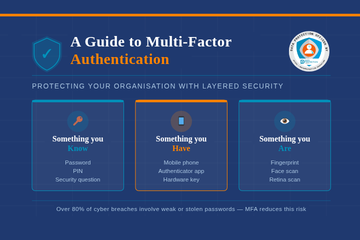
October 14. Access Control : (Multi-factor authentication)

Multi factor authentication is considered the most impactful single step you can take to strengthen your access control to digital accounts, systems and data. While a strong password is your first line of defence, MFA adds a critical second (or more) layer of verification, making it much harder for cyber criminals to gain unauthorised entry, even if they've stolen your password.

Read more …

"A graphic announcing 'October is Cyber Security Awareness Month,' with text explaining the importance of creating a cyber emergency contact list in preparation for a cyber attack. It also includes a 'Cyber tip' to assess passwords, turn on MFA, and review critical accounts, especially email. A shield icon with a checkmark and a lightbulb icon are visible."

October 11. Policies and Procedures: Cyber Blueprint

Cyber security has many levels; policies and procedures are about establishing clear rules, guidelines and processes that govern how information is handled within an organisation.  Well-defined policies and procedures serve as the blueprint for your cyber security program, ensuring consistent practices, reducing human error and providing a framework for accountability.

Read more …

"A graphic announcing 'October is Cyber Security Awareness Month,' with text explaining the importance of creating a cyber emergency contact list in preparation for a cyber attack. It also includes a 'Cyber tip' to assess passwords, turn on MFA, and review critical accounts, especially email. A shield icon with a checkmark and a lightbulb icon are visible."

October 10. Understanding Your Cyber Posture

Before you can effectively improve your cyber security, you must first understand where you are - Understand Your Cyber Posture. It involves a thorough evaluation of your existing security measures, identifying vulnerabilities, and understanding the risks you face.  You can't protect what you don't know you have or what weaknesses you might have hidden

Read more …

"A graphic announcing 'October is Cyber Security Awareness Month,' with text explaining the importance of creating a cyber emergency contact list in preparation for a cyber attack. It also includes a 'Cyber tip' to assess passwords, turn on MFA, and review critical accounts, especially email. A shield icon with a checkmark and a lightbulb icon are visible."

October 8. How Can Your Organisation Prevent Ransomware Attacks?

Preventing ransomware attacks requires a multi-layered approach.  Regular backups are crucial - ensure they are isolated and tested. Employee training is paramount; staff must be able to recognise a phishing attempt.  All software and systems should be updated to patch vulnerabilities.  Strong access controls and MFA for all accounts will prevent up to 89% of data beaches.

Read more …

"A graphic announcing 'October is Cyber Security Awareness Month,' with text explaining the importance of creating a cyber emergency contact list in preparation for a cyber attack. It also includes a 'Cyber tip' to assess passwords, turn on MFA, and review critical accounts, especially email. A shield icon with a checkmark and a lightbulb icon are visible."

October 7: Under Attack: The Reality of Ransomware

The headlines often focus on large organisations or governments falling victim to cyber attacks, such as M&S and the Co-op, however, there is an increasing number of attacks on schools and colleges.  A ransomware attack on a school can be particularly devastating, crippling operations, disrupting learning and putting sensitive student and staff data at risk.

Read more …

"A graphic announcing 'October is Cyber Security Awareness Month,' with text explaining the importance of creating a cyber emergency contact list in preparation for a cyber attack. It also includes a 'Cyber tip' to assess passwords, turn on MFA, and review critical accounts, especially email. A shield icon with a checkmark and a lightbulb icon are visible."

October 6: Cyber Action Plan and A Roadmap to Resilience

Creating a cyber action plan will help you navigate the digital world safely.  A well thought out plan can help you with a structured approach to improving your security posture, help identify weaknesses and ensure a rapid response when an incident occurs.  It can move you from reactive panic to proactive preparedness.

Read more …

"A graphic announcing 'October is Cyber Security Awareness Month,' with text saying be your own digital guardian.  Take ownership of your own digital footprint. It also includes a 'Cyber tip' to assess passwords, turn on MFA, and review critical accounts, especially email. A shield icon with a checkmark and a lightbulb icon are visible."

October 5: Cyber Responsibilities - We're All in This Together

While cyber security may sound complex and something just for 'the IT department', that couldn't be further from the truth.  Cyber security is a shared responsibility, and every individual from the CEO down to the newest apprentice, plays a vital role in protection themselves and their broader digital ecosystem.

Read more …

"A graphic announcing 'October is Cyber Security Awareness Month,' with text explaining the importance of creating a cyber emergency contact list in preparation for a cyber attack. It also includes a 'Cyber tip' to assess passwords, turn on MFA, and review critical accounts, especially email. A shield icon with a checkmark and a lightbulb icon are visible."

October 4: When a Cyber Attack Hits

Even with the robust preventative measures, cyber attacks can happen.  The key is is not to panic and to have a plan, most organisations will call this a cyber incident response plan.  Knowing what to do in the immediate aftermath can significantly mitigate the damage, limit data loss and speed up recovery.

Read more …

  1. October 2: Privacy Protection & Safeguarding Personal Data
  2. October 1: Welcome to Cyber Security Awareness Month!
  3. Nursery Cyber attack
  4. The NCSC Cyber Assessment Framework
  5. Fraud awareness from the DfE
  6. Complaints vs. Data Rights: A Guide
  7. The Classroom's Dark Side: Cyber crime from the Classroom
  8. Data Breach: School sends out names and contact details in a spreadsheet.
  9. September 2025 Policy and Document Updates
  10. KCSIE 2025: Data Protection, AI, and Cyber Security
  11. New e-learning for 2025
  12. The Online SCR Data Breach: What You Need to Know
  13. Back to School Basics for Data Protection and Cyber Security Compliance
  14. The Latest Cyber Threat: The "Murky Panda"
  15. Building a Secure School: Using the ICO Accountability Framework to Meet DfE Digital Standards
  16. Why Physical and Data Security Must Go Hand-In-Hand
  17. Digital Safeguarding: DfE announces statutory DfE Digital Standards
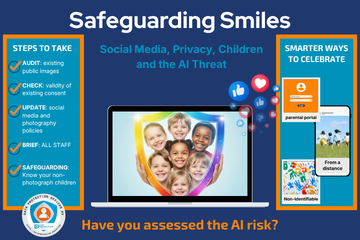
  18. Safeguarding Smiles & Social Media!
  19. The Data Protection Lead/Champion Role
  20. Changes to the Academy Trust Handbook 2025
  21. Compliance Reporting from the Knowledge Bank
  22. School closes for two days after cyber incident
  23. Social Media Day 2025
  24. How Ofsted looks at AI during inspection and regulation
  25. Podcast Episode 3: Records Management and Retention
  26. DPE MAT Conference Early Bird Discount!
  27. Podcast Episode 1 - data protection training for school staff
  28. Holiday Cheer or Cyber Fear? : Essential Pre-holiday Checks
  29. Preschool Employment tribunal for the use of WhatsApp
  30. Social engineering + impersonation = Fraud ≡ cyber deception
  31. Data Breaches 2025 Report Highlights
  32. Not everyone needs access: The Key to Protecting Sensitive Data
  33. School cyber attack: Outwood Academy, Middlesbrough
  34. Alert: Schools receiving Microsoft File Sharing Phishing Emails
  35. School cyber attack: Framlingham College, Suffolk
  36. West Lothian Schools in Cyber Attack
  37. Getting caught in the Scattered Spider web
  38. A Wake-Up Call for Cyber Vigilance - Danger in the Threat Landscape for Everyone
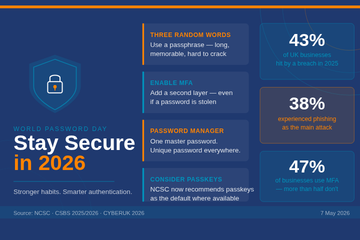
  39. World Password Day
  40. National Honesty Day: Transparency
  41. FOI Request - BBC News
  42. Social Media and Marketing Guidelines and Training
  43. New Governor Resources
  44. Does stress lead to more data breaches?
  45. World Backup Day
  46. Are teachers using AI? 83% say its a time-saver
  47. DfE Digital Standards - narrowing the digital divide
  48. Arbor AI - On By Default
  49. DfE Guidance: Choosing a new MIS
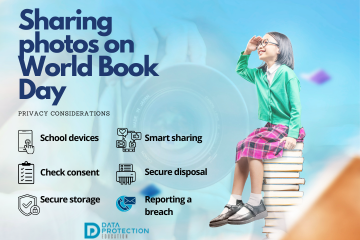
  50. Sharing photos on World Book Day: Privacy considerations
  51. HCRG Care Group data breach
  52. Apple removes its highest level data security tool from UK customers
  53. The Importance of AI literacy and training staff
  54. How to verify visitors the right way
  55. Short Guide to AI Video
  56. Safer Internet Day, Cyber Security & Data Protection
  57. The Cyber Resilience Championship
  58. The Multiple Dimensions of Supplier Due Diligence
  59. School shares sensitive pupil information as part of an FOI response
  60. AI (Artificial Intelligence) Best Practice Area & Policy
  61. Blacon High School Cyber Attack
  62. WhatsApp and FOI's: ICO Warnings
  63. New AI Guidance from the DfE
  64. The role of Passkeys in Cyber Resilience and Cyber Security
  65. What the proposed Government legislative proposal around cyber crime means
  66. ICO report on AI tools in recruitment
  67. DfE update to record keeping and management
  68. Update to data sharing for school immunisation programmes
  69. Early Years Settings and Cyber Security
  70. SLT Digital Lead Profile
  71. Ransomware-Resistant Backups
  72. The role of governors in cyber security and data protection
  73. Navigating Privacy at the End of Term , Special Occasions and End of Year
  74. Effectively communicating during a cyber incident
  75. Contracts Register
  76. South East Technological University has experienced a cyber incident
  77. Safeguarding Identity in Microsoft 365: Protecting the UK Education Sector Against Cyber Threats
  78. DfE Digital Standards Autumn Update
  79. The importance of knowing how to access your CCTV footage!
  80. Cyber Attack on a Special School
  81. Stealing children's data
  82. What is dark data? (and why does it matter?)
  83. Ofqual highlights the value of cyber security training in schools
  84. Searching for data when you receive a Subject Access Request
  85. Fylde Coast Academy Trust Cyber Attack This Week
  86. Calling all IT leads in schools and mult academy trusts!
  87. Ransomware cyber attack on a school in Bromley
  88. Join Our Social Media Family!
  89. School hit by Cyber Attack
  90. Cyber Security Best Practice Area
  91. DfE Digital Standards for Schools and Colleges Tracker
  92. New Policies, Documents, Letters and Posters page
  93. Schools and Trusts Best Practice Area
  94. The DPE Retention Schedule
  95. Making the Rounds Update (now includes reporting)
  96. ESFA Cyber Essentials Requirement for Colleges from 2024/2025
  97. ICO Reprimands a School
  98. How does the recent global IT outage affect me?
  99. King's speech introduces new bills in relation to cyber security, smart data and digital information
  100. Out of date technology
  101. Data Retention and the Pupil File
  102. Have you assigned your SLT Digital Lead yet?
  103. What's a Cyber Incident and what should we do?
  104. Getting Started with AI (Artificial Intelligence)
  105. Cyber attack on a school during half term
  106. Free short cyber training for staff
  107. Update to the DfE Digital Cyber Security Standards for Schools and Colleges (May 2024)
  108. The rise of cyber attacks in schools are causing pupils to miss classes
  109. ICO: Learning from the mistakes of others report
  110. Children's mental health data leaked after a cyber attack
  111. Cyber attack on a Trust; the aftermath
  112. School Focus: The Vale Federation | Aylesbury
  113. DfE Dealing with Subject Access Requests (SARs) Guidance
  114. Update to the Guidance on Information Sharing from the DfE
  115. FOI Requests generated by Artificial Intelligence
  116. Social Media Best Practice Area
  117. Lettings Best Practice Area
  118. Appropriate filtering and monitoring definitions
  119. MFA Bombing - What is it?
  120. Protecting your Social Media Accounts
  121. Why we recommend using checklists
  122. Product Focus on Checklists : Initial Trust Plan
  123. Product Focus on Checklists : End of Term Checklist
  124. Product Focus on Checklists : Information and Cyber Security
  125. Product Focus on Checklists : Social Media
  126. Cyber Incident Review: The Benefits
  127. Product Focus on Checklists : Lettings
  128. Product Focus on Checklists : Record of Processing
  129. Milk Island: The secret location that allows children to view restricted content on Google Maps
  130. Why Data Should Stay Put: Benefits of Keeping Data in Its Original System
  131. Product Focus on Checklists : Data Retention and Destruction
  132. Product Focus on Checklists : Data Migration
  133. Product Focus on Checklists : Biometrics
  134. Product Focus on Checklists : Supplier Due Diligence
  135. Free Cyber help, advice and training with the Cyber Resilience Centres
  136. The Perils of Paper: The Printing Vulnerability
  137. Product Focus on Checklists : FOI
  138. Product Focus on Checklists : Governors and Data
  139. Product Focus on Checklists : DPIA
  140. Product Focus on Checklists : Site Moves
  141. Product Focus on Checklists : Data Breaches
  142. Product Focus on Checklists : Subject Access Requests
  143. Cyber attack on a University
  144. Product Focus on Checklists : Bring your own device
  145. Product Focus on Checklists : Working out of school/offsite
  146. Cyber Attack on a School
  147. Product Focus on Checklists : Redaction
  148. Major cyber-criminal gang Lockbit brought down by UK Law Enforcement
  149. Why Due Diligence is Important: Fake apps
  150. Product Focus on Checklists : CCTV
  151. Product Focus on Checklists : Clear desk
  152. Product Focus on Checklists : Commitment to compliance
  153. Product Focus on Checklists : Photos and video
  154. Product Focus on Checklists : Passwords
  155. Product Focus on Checklists : Information Classification
  156. Safer Internet Day 2024
  157. Kent Councils Data Breach
  158. Free cyber training for staff
  159. DfE Digital Standards Update
  160. The Mother of all Breaches
  161. ClassCharts Possible Data Breach
  162. Where is your data stored?
  163. IAPP looks at AI privacy risks
  164. If you suspect a financial scam .....
  165. Guardians of Privacy: 16. Social Media Checklist
  166. Guardians of Privacy: 15. Navigating Social Media in Educational Settings Summary
  167. Guardians of Privacy: 14. Social Media and Cyber Bullying
  168. Guardians of Privacy: 13. Social Media, Copyright and Intellectual Property
  169. Guardians of Privacy: 12. Social Media and Going Viral
  170. Guardians of Privacy: 11. Staff Social Media Accounts
  171. Guardians of Privacy: 10. Social Media and Cookies
  172. Guardians of Privacy: 9. Social Media and Morality
  173. New Resources for Schools from the ICO
  174. Guardians of Privacy: 8. Social Media Policies
  175. Guardians of Privacy: 7. Social Media Data Retention
  176. Guardians of Privacy: 6. Posting Safely
  177. Guardians of Privacy: 5. Social Media and Consent
  178. Guardians of Privacy: 4. Social Media Access Control
  179. Guardians of Privacy: 3. Social Media Channels
  180. Guardians of Privacy: 2. Law and Regulations
  181. Guardians of Privacy: 1. Social media, privacy and children
  182. Latest ICO Reprimand. Mr. S. Claus, Chief Executive Officer, North Pole Enterprises
  183. Phishing attacks targeting schools - alert from City of London Police
  184. The ICO reprimands a Multi Academy Trust
  185. KCSIE: Filtering, Monitoring and Privacy
  186. Guidance for the use of school email and applying email retention in schools
  187. CISA and UK NCSC Announce Joint Guidelines for Secure AI System Development
  188. Data Protection Tips for Early Years Settings
  189. Children's Privacy around the world is a puzzle
  190. Trust Initial Plan Checklist Update
  191. Update on Advisory for Rhysida Ransomware
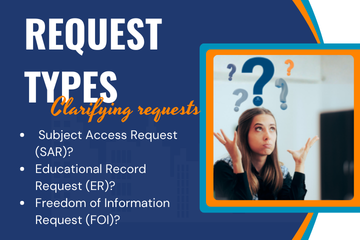
  192. Records Management Best Practice Update
  193. Governors and Data Best Practice Area Update
  194. The Crime in a Cyber Attack and a Data Breach
  195. What do I need to redact?
  196. NCSC Annual Review is published for 2023
  197. Learning from Data Breaches
  198. Windows 11 security ineffective against attacks on old devices
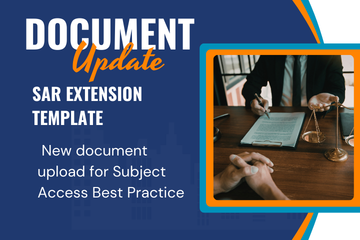
  199. Trust Initial Plan for Data Protection Compliance (for Multi Academy Trusts)
  200. International Counter Ransomware Initiative 2023 Joint Statement
  201. Google for Education Resources: Helping IT Admins meet DfE digital and technology standards
  202. Resistant Cloud Backups
  203. Top Ten Cyber Security Misconfigurations
  204. Lettings Best Practice and Guidance
  205. ICO Reprimand: company suffered a ransomware attack
  206. The UK Online Safety Bill becomes an Act (Law)
  207. Considerations when migrating to a new MIS
  208. The importance of software updates (PaperCut vulnerability and Rhysida ransomware)
  209. Public bodies and sensitive data
  210. Adding offline bulk training using the Certificates function
  211. Ransomware, extortion and the cyber crime ecosystem
  212. Get a DPE Badge for your website!
  213. ICO: 10 Step guide to sharing information to safeguard children
  214. Cyber Resource: The Cyber Resilience Centre Group
  215. Email and Security: ICO recent guidance
  216. Help after a Cyber Attack/Incident
  217. Social Media Policy
  218. Data Protection and Cyber Security (Inset Day) Training Ideas
  219. Changes to Microsoft Free Licensing for Schools
  220. What to do in the event of a Cyber Attack
  221. Cyber Crime: AI Generated Phishing Attacks
  222. Handling Freedom of Information Requests the right way
  223. Cyber Attack: Exam Boards
  224. VICE SOCIETY - Ransomware attacks on schools
  225. Using Tags if you are a group of organisations in the DPE Knowledge Bank
  226. Where's Harry the Hacker?
  227. Be Cyber Aware: USB Sticks
  228. Cyber Insurance in the Public Sector
  229. Types of Cyber Attacks: DDos Attack (Microsoft DDoS Attack in June)
  230. Cyber Attack: Manchester University
  231. Cyber Attack: Leytonstone School
  232. The ICO Reprimands a school
  233. Be Cyber Aware: Firewalls
  234. Be Cyber Aware: Cyber attacks and transparency. A no blame culture
  235. Cyber Attack: Dorchester School
  236. Knowledge Bank Role Types: Admin, Staff and Trustee
  237. Types of Cyber Attacks: Password Attacks
  238. Be Cyber Aware: Why regular software updates are important
  239. Cyber Attack: Wiltshire School
  240. Keeping your IT systems safe and secure
  241. Types of Cyber Attacks: DDoS Attacks
  242. Types of Cyber Attacks: Phishing
  243. Types of Cyber Attacks: The Insider Threat
  244. Why your data is profitable to cyber criminals
  245. Using WhatsApp in Schools
  246. The Changes to Data Protection in the UK
  247. Knowledge Bank Updates
  248. Types of malware and how they are linked to data protection
  249. Striking Data Breach
  250. IPR Protection Email Scam
  251. Windows Server 2012 & 2012 R2 Retirement
  252. How to contact us for support, subject access requests, data breaches and FOI's
  253. YouTube breached child protection laws
  254. How a school fought back after a cyberattack
  255. Types of Cyber Attacks - Credential Stuffing
  256. January Cyber update - How Can Schools Help Prevent Cyber Attacks?
  257. Assigning courses to staff using to-dos
  258. How the Record of Processing Can Help You
  259. Information Security Basics: What are VPN's?
  260. What does a Data Protection Officer Do?
  261. Are you ready for a Data Breach?
  262. Carrying out Supplier Due Diligence
  263. How Long Should You Keep Personal Data For?
  264. The Education sector now at highest risk of cyber attacks
  265. How to Assess your Data Security
  266. Schools Blocked from Using Facial Recognition Systems
  267. The Children's Code
  268. B&H FoI: Racist/religious incidents/bullying
  269. Cyber Attacks
  270. Protocol for Setting Up and Delivery of Online Teaching and Learning
  271. Class Dojo International Data Sharing
  272. Model Publication Scheme: Amendments, Improvements and Updates
  273. Child friendly privacy notices
  274. Transparency
  275. SAR? ER? FOI?
  276. Secure file transfer of files using Royal Mail
  277. Emergency contacts and consent
  278. Key elements of a successful DPIA
  279. FOI Publication Schemes
  280. SHARE: Avoid disinformation online
  281. Best Practice for Managing Photos and Video
  282. New Drip Feeds: Recognise and Respond to Subject Access Request
  283. When to contact the Data Protection Officer?
  284. National child measurement programme
  285. Make sure DPE is your registered DPO with the ICO
  286. Compliance Manager released
  287. Headteacher fined for breach of data protection legislation
  288. Emails – good practice and minimising the risk of a data breach

Search

Keep in the Know!

Get our latest news directly to your inbox

Privacy notice